CableTiesAndMore.com Blog

Search

Browsing: / Home

CAT5 to CAT6a Cables (And What’s In Between)

By Gillian Bowles on May 10, 2012 in Electrical, Home Theater Accessories, Network Products, Uncategorized

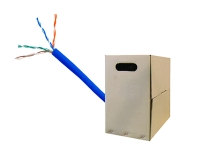
CAT6 cablesFor owners of anything from home theater systems to large servers, staying up-to-date with changing technology is mandatory to optimize applications. At use wherever connectivity is needed are CAT5, CAT5e, CAT6 and CAT6a cables, lines that though used frequently, you may not be able to discern between. Not all CAT cables are created equal, as their names suggest, and selecting the wrong cable for your network could mean anything from sluggish performance to a useless expense. Since neither are grand, lets get these CAT’s sorted.

The basic make-up of a CAT cable includes four pairs of copper wires (four is standard, though variations exist) within a sleeve, and each pair twists together in unique ways, minimizing interference from the others and blocking noise. Starting with the oldest, the CAT5 cable still makes up most installed and functioning connection cables at use (Find out more), so don’t sweat too much if this is still what your using. Its prodigy, the CAT5e, promised enhanced capacities for data transfer, enough to perform with high-speed Gigabit Ethernet. It is not Gigabit certified, though still contrasting CAT5 which is well below certification. While the enhanced cable supports 1000 Mbps, you will be working with 100Mbps of Ethernet with the original CAT5. Each CAT5 type has frequencies of up to 100MHz, with the CAT5e accommodating higher bandwidths. Your CAT5 has a maximum length of 328′ per cable before connectivity is compromised, much like the CAT5e, though the latter may need to be shortened if  attempting to work  beyond  100BASE-TX Ethernet and perform at gigabit Ethernet speeds (Find out more). So what’s the story so far? If your needs are moderate, CAT5 can serve you just fine. But if you are hoping for something more heavy-duty, the enhanced capabilities of CAT5e outweighs any length concerns, plus a simple repeater removes restrictions.

On to contemporary cables, CAT6 is the  standard for Gigabit Ethernet. CAT6 performs at 250 MHz, and unlike the earlier cables, there are physical differences that impact it. The CAT6 lines are bulkier and use more copper, increasing performance while it specifically surpasses previous cables though its strict specifications for reducing system noise and crosstalk. Still utilizing previous standards of twisting pairs of wires, an additional separator compartmentalizes each pair, furthering defense against interference,  also enabling quicker data transfer and allowing for twice the bandwidth of the two previous  cables. Despite this, our tech world is swirling too fast for even CAT6 to seem shiny & new for long, so the up-and-comer is now the CAT6a, a 500 MHz frequency cable with a transfer rate of 10 GB, beating the pants off CAT6 which has a rate of 1 GB. As only cable fully prepared for the future of 10Gbase-T Ethernet (Find out more) with the maximum length of 328′ intact, CAT6a reigns supreme because CAT6′s maximum length is cut in half when dealing with 10Gbase-T, at best. These cables range as much in price as performance, but while CAT6 & 6a are more expensive, by installing them you ready your network for a future where 10Gbase-T Ethernet may be the norm.  So depending on your budget and needs, these fifth and sixth generation CAT cables will either usher you into the future of Ethernet, or leave you comfortably where you were in 1998.


Share this on: Mixx Delicious Digg Facebook Twitter

Avoid Insects without Damaging Cable Set-Up

By Gillian Bowles on April 26, 2012 in Electrical, Floor Cord & Cable Covers, Uncategorized

Although awesome in its own right, wire routing and concealed cable management can cause bug issues in hot months, serving as direct highways leading industrious trails of creepy-crawlers right into your kitchen, dining room or bathroom.

Don’t despair however, because the fix can be simple, while leaving your covers and  molding in place, looking sleek and insect-free. Simply locate the areas where the troops of pests seem to be coming from. Often, problem areas can be found in the connection points of telephone, cable and internet lines. Since harsh insecticides can be damaging to people and pets as well as the bugs themselves, try to use natural alternatives which are generally equally effective to their toxic counterparts. In this case, I recommend applying petroleum jelly, as it is mild and decidedly non-toxic for your environment. As a thick and oily barrier, insects like ants will be deterred when the jelly is smeared on all entry points.

To further the benefits, household items like chili powder, peppermint or cinnamon will repel insects as well, while easily sticking to the applied jelly and not creating a mess (More info HERE). So if you see a legion of many-legged critters marching out of your attractively installed raceway connection point, don’t tear it apart in a fit of insectophobia. Just reach for the medicine cabinet and spice cupboard, and let those resting wires lie.

Share this on: Mixx Delicious Digg Facebook Twitter

Cable Ties, garage sales & more

By Gillian Bowles on April 26, 2012 in Cable Identification, Cable Organizers, Cable Ties, Uncategorized

Summer is creeping closer, made apparent as I see Mothers Day sneak up on the calendar. Soon I’ll be searching for Mum-worthy flowers in newly opened garden centers, only to realize just how many plants are blooming and how teeming with backyard supplies and gear store shelves have suddenly become. Garage sale season will boom, along with events like farmers markets and open houses, as weather gives an opportunity for leisure & business to step outside. Cable ties (or Zip Ties) become more diverse too and are depended on in yards, gardens, lawn sales and sheds alike.

Lets start with a true marker of summer, the garage sale. I can count on seeing mangled signs announcing a sale, often hand-made and almost always blowing precariously after being poorly affixed or covered in tape. Regardless if you are advertising an open house, garage sale or your son’s lemonade stand, don’t let your sign be the one that looks messy. Since cable ties can be zipped together to create any length of tie, once you punch holes in each side of your sign, easily use ties to attach it securely around any post or fence. No matter how stormy the weather, one thing to be counted on will be the legibility of your advertising. Not only that, but ties can bind items in a set, as well as providing some security during lawn sales. When selling goods at a market, ties keep items secure in wind as well as bundle goods and assist in set-up or the decoration of your booth. As well,  stainless steel ties ensure that the elements don’t compromise the strong bond. Now, another major part of summer is the fact that kids aren’t in school. For parents of very small children, this poses the need to childproof, where cable ties are ideal. Toxic cleaners in a cabinet? A simple reusable tie binding handles means that your tyke won’t be gaining access to dangerous goodies, while you have free reign without waste from single use ties. Also, cable ties can be downright fun for older children to play with, making terrific and importantly safe craft tools. Incredible creations emerge from cable ties, ranging from simple wreaths to detailed sculptures, and with colors to choose from, ties should become a fixture in any craft corner. Check out an amazing cable tie artist HERE.

Back outside, activities like gardening, cycling and boating all benefit from ties. Hoping to put a basket or water bottle holder on your bicycle? With just a few zips, you can affix anything to your 18 geared steed, and when out in your boat, water-resistant ties will keep legally required bailing gear easy to access and organized. Finally, as those with a green thumb know, cable ties can help guide plants as they grow, supporting them, as well as revolutionizing your work shed with instant loops to hang tools on. So get ready for the heat, just remember sunscreen and a pack or two of cable ties.

Share this on: Mixx Delicious Digg Facebook Twitter

Cable Management in Unique Settings

By Gillian Bowles on April 13, 2012 in Cable Organizers, Cable Trays, Electrical, Uncategorized

Offices, homes and industrial settings require comprehensive cable management, but it I’ve never really focused on unique situations where such needs may be exacerbated. Case in point: This afternoon, the Boston Red Sox play their home-opening game in Fenway Park, which is simultaneously celebrating its 100th anniversary this month. While opening games and anniversaries bring excitement and doses of glitz & entertainment in their own right, the key point here is that very large number, 100. In the past century, we have seen the largest technological advancements in human history. So, how is it that Fenway Park (built in the same year as the founding of the Girl Scouts and the sinking of Titanic, to put this in perspective) can cope with hosting the colossal festivities planned for today, including instant-uploads, press power access and Wi-Fi for thousands of fans? Well, not to burst the bubble I have been inflating, but fairly easily, it seems. With (wait for it…) the proper cable management.

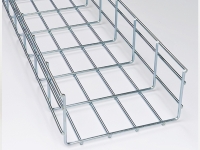
Steve Conley is the Red Sox’s IT director, and was interviewed for Good Gear Guide about how a stadium in it’s golden years competes with modern sports facilities. And it can be done, with a whole lot of fiber optics cables. Fenway is getting its first Comcast Metro Ethernet fiber connection guaranteeing a level of 100Mbps, thoroughly placing them in the land of the living regarding connectivity. Such installations require space to harbor cables, as even drooping could damage cables, causing massive technical difficulties. According to Conley, man-holes allowed for easy conduit Cable Trayplacement, but the real hero’s of Fenway’s festivities (excluding the athletes) are some awesome cable management apparatus’, cable trays. Trays go up easily, and serve as pathways to safely route wires. In older, less accommodating spaces, trays can route along the ceiling without using methods of mounting cords themselves, which with fiber optics will lead to pinching, and leave the entire route vulnerable. Our line of trays are inexpensive, ideal for larger projects where connectivity is a necessity. When searching for your trays, make sure to pay attention to the grid size of the base. Smaller grids, like our PRO-10 Series CM10 trays gives you an idea, since with a grid of only 2″ x 2″ there will be smooth support for lines, without sag. Larger grid sizes, such as our M.E.2 trays at 2” x 4”, are recommended for heavier cables. For spaces that are, again, very unique if not exactly from our architectural generation, we also carry Snake Trays, which can be bent by hand to conform in your setting.

So the next time you are watching a game taking place at Fenway Park, regardless if your team wins or looses, take a moment to ponder the awesome collision of old architecture and cutting edge technology, blending so seamlessly that no one needs to wonder, how do they power it all?

For the full article at Good Gear Guide by Brad Reed, Click Here.

Share this on: Mixx Delicious Digg Facebook Twitter

Connectrac™ I Series

By Gillian Bowles on April 13, 2012 in Cable Organizers, Electrical, Floor Cord & Cable Covers, Power and Data Distribution

ConnectracFor one quiet summer many years ago, I spent my time not writing blogs and espousing cable management knowledge, but as a secretary in a doctors office. Something bringing me daily grief was the tangle of cables under foot, making my solo office a dysfunctional black-hole for pens and ports alike (not to mention ugly, lucky for the concealment of my receptionist blockade). While this example is extremely small scale, in areas like office buildings, conference halls or hotels, where a professional aesthetic is required along with a real need for major power/data access, solutions generally involve expensive construction for coring or raised flooring, or power poles that take up your space. Thankfully,  frustrated architectural minds came together to put an end to these bleak options, and the result is our new product,  the Connectrac™ I Series.

Like other power access points it provides individual connections, and each length of  Connectrac™ boasts two 110-volt power receptacles, as well as accommodations for 2 – 4 voice/data or AV ports. Installation should take no more than two hours (take that, raised flooring) and when installed it  stands a mere .75″ high. Simply lay the  aluminum base on a cleared track of floor. The wall of your power connection needs the brief interference of an electrician, while being made accessible with a small hole. The conduit & receptacle are placed on the track, with wires fed through the wall. Next, ramps are placed along the length, and here Connectrac™ stands above the rest. Ramps are made from moisture resistant MDF and have a low slope, so no jarring ridges for feet and rolling furniture. Over these ramps carpet will be replaced, minimizing the appearance. Once ramps are fitted and secured with adhesive, an end ramp frames the box, allowing another gentle slope. A cover secures the receptacle, and the wireway top cap snaps on, with 5 finish options to complement your area.

As a fix for bulky or expensive data/power access, Connectrac™ is the best option with its  sleek appearance and major savings on time and money. Our product page has a comprehensive video for all you DIY installers, so don’t hesitate! This system is simple yet brilliant, and will save your setting from looking like the office of a novice secretary while getting you the power you need.

Share this on: Mixx Delicious Digg Facebook Twitter

Metal Detectable Nylon Cable Ties

By Gillian Bowles on April 5, 2012 in Cable Identification, Cable Organizers, Cable Ties

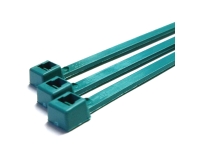
Food Grade Metal Detectable Nylon Cable TiesCable ties (‘zip ties’) are used in colossal amounts through countless industries. Chances are that one of the few things a shoe retail outlet may have in common with an off-shore oil rig is their sky-high tie use. In factories and processing plants, cable ties are forever attached, tightened and trimmed, ultimately snipped off, replaced, etc. The life of a tie is a vicious cycle, but importantly I can imagine chances for even miniscule levels of plastic material to be constantly sifting and settling. When dealing with food or pharmaceutical industries, contamination becomes more of a likelihood than a risk (and the risk alone is not worth a costly recall) so health worries are a chief concern. Increasingly, particularly food companies deal with the dual issue of legal woes and bad press due to pollutants that normally do not even appear in visual checks or safeguarding scans and X-rays. Thus from necessity, the Metal Detectable Cable Tie is born, a nylon based material blended with iron, creating magnetic properties throughout and making it easily identifiable through metal detection. Critically though, they are first and foremost a food-safe tie, so not only are they ensured visibility during scans and will not be packaged with products, but they expel no contamination if they are to contact digestibles that would be better left untouched.  Available in tensile strengths which range from 18lbs to 120 lbs, it is a dependable tie, all special features aside.  Our Metal Detectable Ties can be selected from 4” to 8” long, and are constructed in a singular piece, ensuring even more strength and consistency in performance. A curved tip will feed easily into the head of the Metal Detectable Tie, and smoothed edges promote far more comfort when installing. The blue color will make it even easier for visual in-plant checks to spot debris, but of course what does get by will be immediately seen by any type of metal detection scan. The fact that they are weather resistant and ideal for any setting makes them a hardy alternative to many popular ties, and they are a far more cost effective purchase than stainless steel ties. Our Food Grade Metal Detectable Cable Ties are in compliance with food, beverage and pharmaceutical safety standards, and they are even becoming part of that standard.  I think all of us food consumers can feel pretty good about that.

Share this on: Mixx Delicious Digg Facebook Twitter

Velcro® vs. Hook & Loop: Tale Old as Time

By Gillian Bowles on March 23, 2012 in Cable Identification, Cable Organizers, Cable Ties, Cable Wraps, Hook & Loop, Hook & Loop Fasteners
Velcro®

Velcro® is a single laminated strip.

I confess that even deep in my immersion of learning cable management solutions, I didn’t know the difference between Velcro® and Hook and Loop material. I called everything Velcro®. Straps on children shoes? You know it. Fabric latches on pouches, fasteners on elbow pads, and those tricky gloves that stick to fabric covered balls? Velcro®, the whole lot of them (so I foolishly supposed). This is not at all the case in fact, though I doubt I have been alone in my ignorance. Eager to share wisdom, I present two nearly identical items except that while one is Velcro®, the other is made from that elusive creature, hook & loop.

Hook & Loop Wrap

Hook & Loop Wrap is nylon hook with a ploy hook base.

We create our own fabric ties, the CableTiesandMore Hook & Loop Wraps. Complementing them are the very similar (in looks and function) Velcro® One-Wraps. Our Hook & Loop Wraps are strong strips, crafted from a nylon loop top and a poly hook base. While bonded durably, they are two distinct pieces of material, working together to create a fastener. Now enter the  Velcro® One-Wrap, and with inspection the differences can be found. Here, the hooks & loops are not individual strips but rather a laminated top and base, for one singular piece of wrap. Though each may boast the same enduring tensile strength, the laminated Velcro® also features a more compressed form of hook & loop technology, with distinctive teeth less obvious than most latching hooked material. We carry various products made of both Velcro®  and Hook & Loop, and a specific feature of Velcro® is that it tends to be slightly slimmer than other fabric wraps, again because of that lamination. Both types of products are reusable without degradation, making them better for many tasks than a single-use cable tie,  and their colors and the fact that they are soft on hands makes then ideal for daily bundling jobs, not only as cable wrap. Our ties are also made of imported fabrics, and while not consistently as slim as Velcro®, they are slightly less expensive.

So now you know! Same effect, though slightly different tools. I love both wraps, and hook & loop materials in general. I am a  tree-hugger, and happily hook & loop reduces large amounts of waste thanks to its infinite re-usability. As well, the fabric means that weather will not cause corrosion or rust as with other ties, making these fabric wraps great for outdoor applications on top of everything else. So regardless of where you land in this landscape of Velcro®  look-alikes, either it or Hook & Loop products strongly fasten items, while letting you control the tension uniquely for delicate lines and hearty items combined.

Velcro® One-Wrap

Can you tell? (...these are Velcro® One-Wraps)


Share this on: Mixx Delicious Digg Facebook Twitter

Snake Trays

By Gillian Bowles on March 22, 2012 in Cable Organizers, Cable Trays, Electrical, Uncategorized

Snake Cable TrayCable Trays are integral when you have a bunch of wires that will be routed around a significant space, which must still be protected and out of the way. I like to think of them as cable highways, where you are free to go about your business, whether in an industrial or factory setting or the halls of a school, as wires are silently bustling along the overpass above you. Telecommunications and fiber optics cables tend to travel in packs, and those large yet delicate clusters require trays to support them without droops and sagging, though routing rigid lengths of tray systems becomes difficult and frustrating in more unique or close spaces. Getting the exact specs of an area and calculating what lengths will or won’t work takes time, but with our new, extremely versatile Snake Tray, you have a tray working with your specifications, rather than against them.

Made of a flexible steel, trays can actually be hand-bent quickly, allowing you be the designer and dictate where a turn or drop is needed. While my image of an overpass is an option, the Snake Tray is also able to mount to walls or below raised flooring, so they can be hidden or easily accessed. The sides of the tray are high enough to guard your lines, and for uses where a truly huge load needs management, the Double Channel Snake Tray won’t groan under a far larger capacity of wires, and allows for separation. This serpentine system is the inexpensive and easily manipulated solution for tricky specifications, and the only cable tray that does let you mold it in any manner you need. The lengths are 98” long, giving you just over 8 feet to work with at a time, and systems are easily arranged and connected. So if you are planning on setting up some trays for your bundles of cables, make sure you go with Snake Trays, and don’t be stuck with fixed and uncompromising lengths. Because after all, we all need a bit of flexibility.

Share this on: Mixx Delicious Digg Facebook Twitter

The Brain Desktop Data and Power Hub

By Gillian Bowles on February 28, 2012 in Cable Organizers, Computer Accessories, Desk Grommets, Electrical, Power and Data Distribution

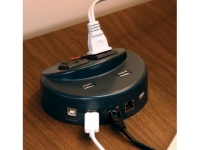
The BrainWe have entered the age & reign of the power/data access center, and I have to say, it is about time. Regardless if you are a CEO or a student, we all have USB sticks kicking around holding digital goods such as files, white papers, music and photos. Our computers need power, our internet connections need ports, and inevitably, ones iPhone needs to be charged immediately. I have found myself and my laptop stranded in electronically inhospitable areas (see my Powertap rant) but it must be said that overall, more public spaces are including grommets and power access centers in work areas. So it is getting better, but somehow these installations seem forever to be several steps and ports behind my needs, which I must say are several steps behind those of many. That is why our new item The Brain Desktop Data and Power Hub stands out fantastically as a small but mighty power distribution center, with a range of jacks that will keep you plugged in through both work and personal use. The Brain will be the warm buzzing center of your digital activities, letting your own jam-packed mind take a break from scanning messes of wires and forcing too many cords to share with too few jacks.

Unless your tapping away on the first PC you ever bought, you shouldn’t have compatibility issues, as The Brain supports Windows 98, 2000, ME, XP and Mac OS, X. It hooks you up with immediate access to AC power with two outlets, as well as a satisfying five USB 2.0 ports. There is also an Ethernet port and phone jack, in case you weren’t as sold at ‘five USB ports’ as I was. Built-in surge protection means The Brain will defend your valuables, and thanks to a simple lit on/off switch, you can help save power and our luscious Lady Earth by flicking off when done. There is 6’ of power cord to work with, and The Brain installs into a desk or surface requiring only a The Brain, installedhole-cut size of 2-3/8″. There are grooves running down the exterior, meaning that when placed in the hole, the outer grommet itself will not be free to spin or move, stopping those cables from winding or being damaged. So don’t deprive yourself or your employees/guests of something that takes care of your digital needs so completely and inexpensively. Never again should there be fiddling or disconnecting of printers, MP3 Players, digital cameras, laptops and USB sticks. As a home-base for all your devices, this Brain won’t forget a single task.

Share this on: Mixx Delicious Digg Facebook Twitter

Cable Clamp®

By Gillian Bowles on February 28, 2012 in Cable Identification, Cable Organizers, Cable Wraps

Cable ClampSometimes when you need a thing bundled, there doesn’t seem to be that perfect tie on hand that lets you wrap contents without a second thought. Like last summer while helping my parents with their yard work, an attempt to casually re-loop the garden hose onto its perch nearly ended in suffocation. The unwieldy length of water-heavy tubing fought to the bitter end against my attempts of a neat return, as I wrestled meters worth of awkwardly looped rubber from my hands to the wall-hook. Items such as a garden hose or strings of holiday lights are not easy things to bundle, being bulky and cumbersome enough to resist the quick fix of a cable tie. Remnants of sticky tape are often left clinging to such items, all that remains of frustrating attempts to simply be done with the task. I plan to never again be bullied by a hose however, because when dealing with lines that need to be re-accessed and bundled without stress and tears, the Mega Cable Clamp is the solution to gain control and a secure, re-usable bundle.

The design is extremely basic, letting you open and close the jaws with just one hand, as well as adjust the jaws for a custom fit that won’t over-tighten your contents or leave them loose. Each clamp is made from polymer and stainless steel, meaning that regardless if your bundling extension cords in your basement or the hose in your backyard, no degradation will occur due to time or the elements. The locking mechanism on the jaws is durable and strong, so even though easy to release, you can trust it. The fact that you are depending on a sturdy bodied clamp is a bonus as well, providing far more support than a flimsy zip tie, tape, or hook & loop product. MEGA Cable ClampThese cable clamps have different sizes available from small, medium, large to MEGA, so even petit devices or cords from amplifiers and instruments can be used then put away without the constant re-opening and closing of single-use items. The MEGA is good for up to 100’ of contents, so from outdoor light strings and garage air hoses to musicians laboring under their necessity of mobility, these clamps make storing and caring for lines easier, while taking a portion of the time I would normally spend hunting for scissors to open something, or wrestling lengths into submission.

Share this on: Mixx Delicious Digg Facebook Twitter
1 2 3 Next »

CTAM Home

CableTiesAndMore Home

Categories

  • Uncategorized
  • Cable Ties
  • Wire Loom
  • Floor Cord & Cable Covers
  • Surface Wall Raceways
  • Cable Identification
  • Braided Sleeving
  • Cable Trays
  • Cable Organizers
  • Cable Wraps
  • Hook & Loop
  • Hook & Loop Fasteners
  • Mounts, Clips
  • Network Products
  • Server Racks and Enclosures
  • Power and Data Distribution
  • Tools & Equipment
  • Home Theater Accessories
  • Computer Accessories
  • Electrical
  • Ramps & Traffic Safety
  • Desk Grommets
  • Spiral Wrap

Archives

  • May 2012
  • April 2012
  • March 2012
  • February 2012
  • January 2012

Copyright © 2012 CableTiesAndMore.com Blog.

Powered by WordPress and News.